Social Commerce
Instagram E-Commerce
Buying a car without leaving Instagram
From a post in the feed to a financed car
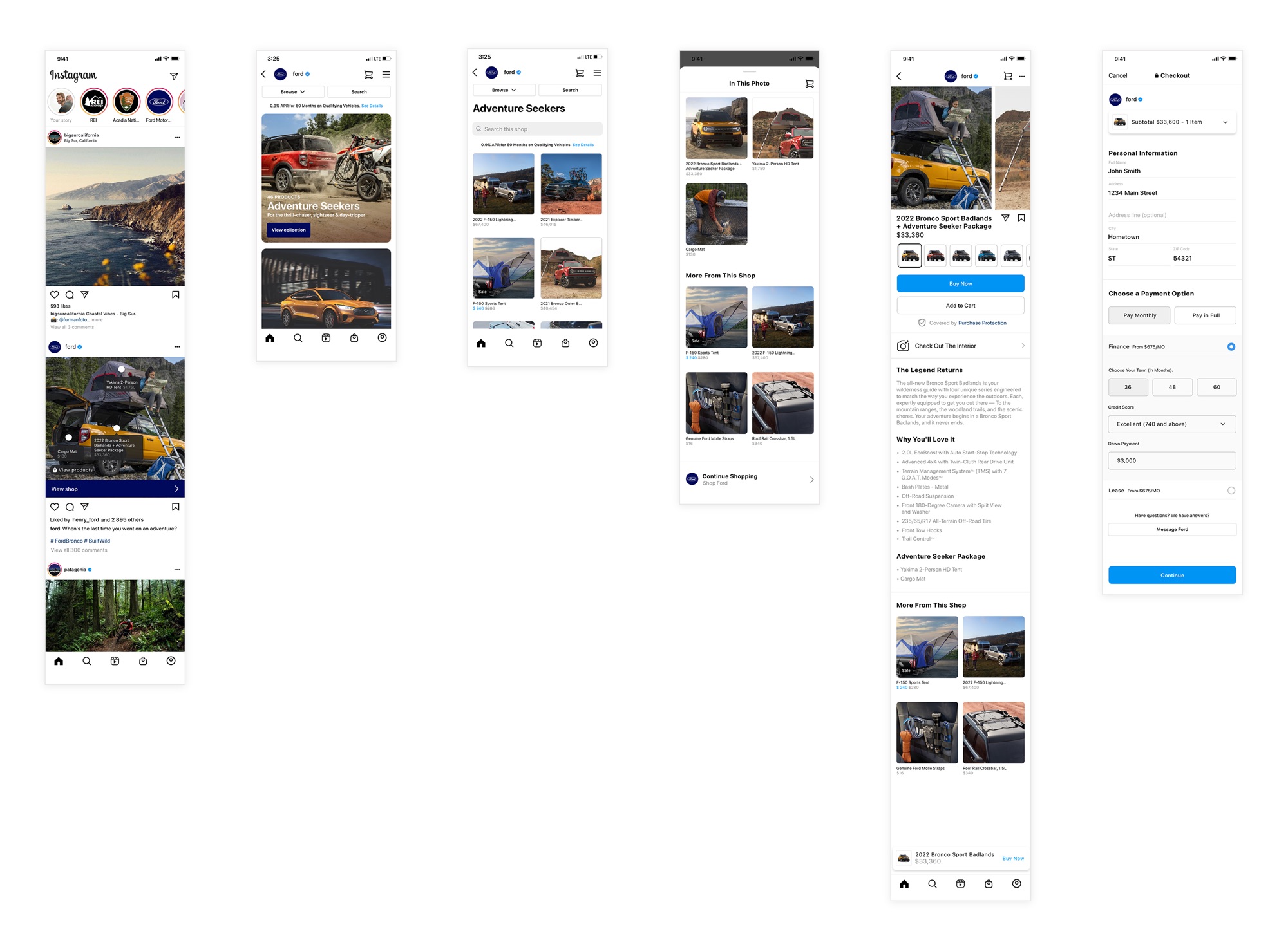
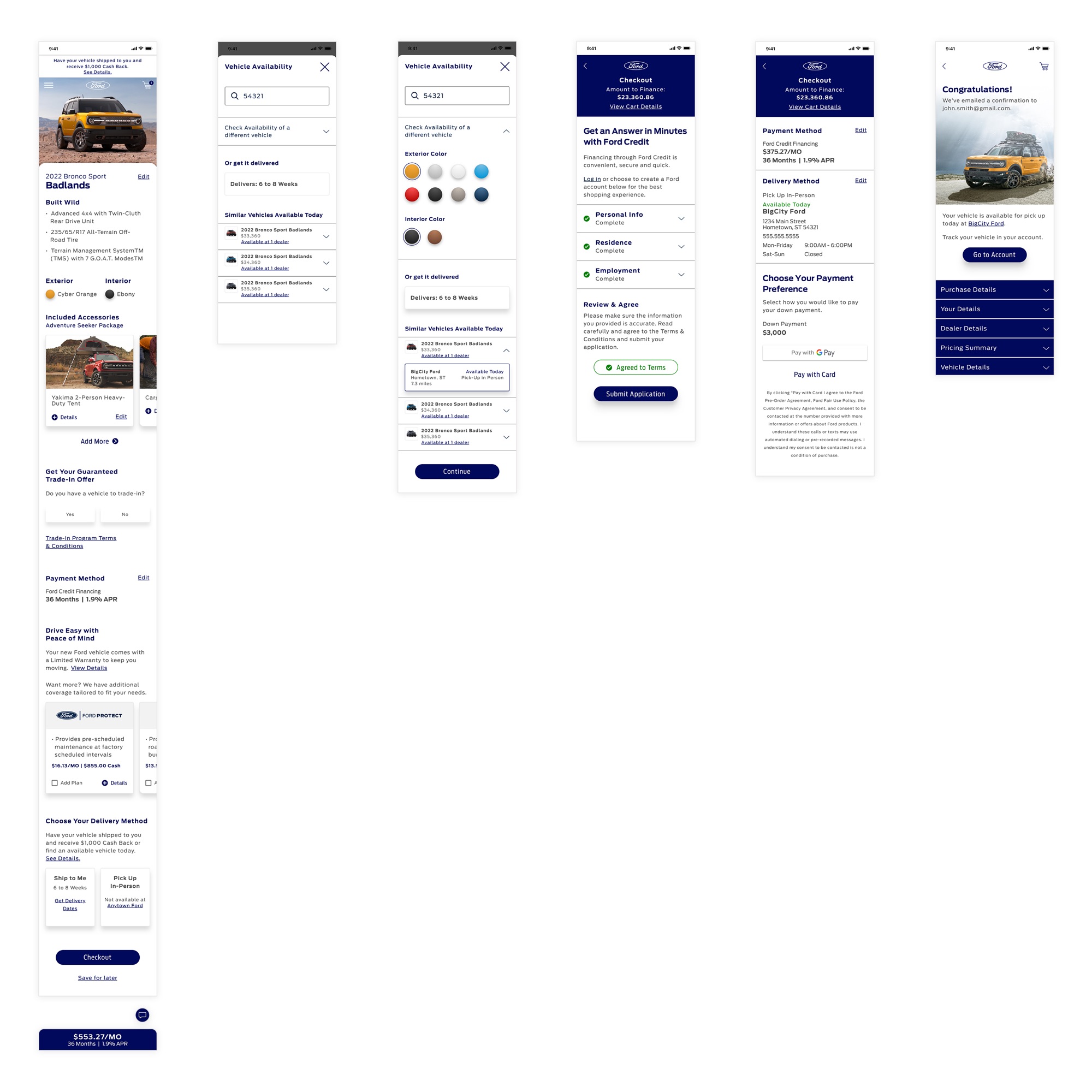
The flow we put in front of users: a tagged post leads to the vehicle's product page, through Instagram checkout, and into the brand's online purchase, financing approval and payment.
Overview
A major automaker's Instagram was full of beautiful vehicles that nobody could shop. I led the design of a proof of concept that turned the brand's own posts into storefronts: tag the vehicle and gear in a photo, browse the brand's shop inside Instagram, and move from checkout straight into buying and financing a vehicle online. We built a prototype of the full journey and tested it with ten people to learn whether anyone would actually buy a car this way.
01. Opportunity
A storefront hiding in plain sight.
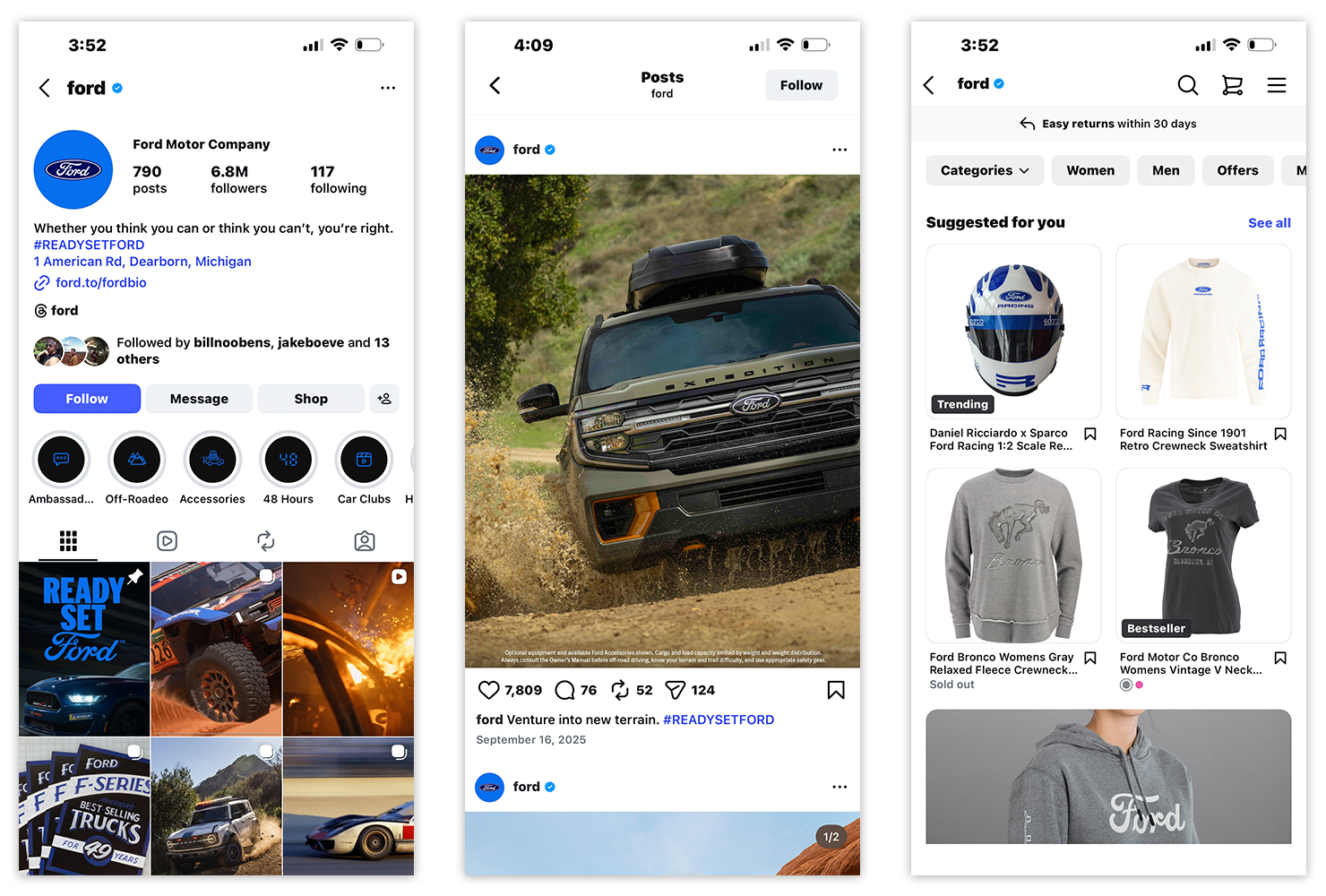
A closer look at the brand's Instagram showed a clear opportunity being left on the table. The account features beautiful, high-quality photos and videos, but it doesn't use Instagram's built-in commerce features: there are no product tags, no clear calls to action, and no easy way to learn more about or shop what's shown in a post.
The Instagram Shop itself is tucked away at the top of the profile, so it rarely appears in people's feeds. And even when they find it, the shop only sells apparel, missing the chance to feature the accessories, and the vehicles, that the content is built around.
The audience is already there.
The people the brand wants to reach already browse, discover and shop on Instagram, and most car shopping already starts online.
- 50%+of U.S. millennials actively use Instagram
- 71%use Instagram weekly
- 70%discover new brands or products on Instagram
- 88%start their car-buying journey online
- #1platform for visual lifestyle content
02. Concept
Every post becomes a way in.
The concept used the shopping tools Instagram already provides, so the experience would feel native rather than like an ad. A post from the brand carries product tags for the vehicle and the gear in the shot. Tapping one opens an Instagram product page with the vehicle's details, color options and the accessories that come with it, while a “View shop” link leads to curated collections like Adventure Seekers.
From Instagram checkout, the purchase continues on the brand's own buying experience: reviewing the build, choosing delivery or pickup, applying for financing through the brand, getting approved and paying the down payment, all without leaving the phone.
03. Testing
Would anyone buy a car this way?
We ran an unmoderated prototype study on UserZoom in October 2021. Ten participants moved through nine screens of the flow, from the feed to the confirmation, reacting to each one and rating how satisfied they felt along the way. The research question was simple: how do people feel about shopping for a new vehicle on Instagram?
10
participants, five men and five women, ages 25 to 55 and up
8 of 10
use Instagram often
6 of 10
had only bought clothing on Instagram; the other four had never bought anything there
04. Findings
Easy to use, harder to trust.
Satisfaction held steady across the whole journey and peaked at the moment of approval. People found the flow simple and complete. What slowed them down wasn't usability, it was confidence: spending this much money on Instagram, and knowing whether the financing in front of them was the best they could get.
Median satisfaction by screen (out of 7)
Where people would stop.
We asked participants where they would leave the flow. Most drop-offs clustered at “Buy online,” the moment the purchase became real, and the reasons were about questions rather than friction. Four said they would go all the way through.
Where participants would leave (of 10)
“Is the financing the best? Need to check if I should use [the brand's] financing or something else.”At Buy online
“Because it was a simple process I was comfortable going all the way through the process.”At the confirmation
Checkout they'd trust.
Two moments in the flow tested especially well. At “Buy online,” seven in ten participants felt confident proceeding with the information they had, rating it a 6 or 7 out of 7. And six in ten rated paying with a mobile wallet like Google Pay a 6 or 7.
“It's very clear that I'd be applying for finance. All pertinent info is there.”At Buy online
“I still have questions. Am I fully approved for the [brand's] financing I was presented with? What will my actual payments be each month?”At Buy online
The prototype moved people who were open to it.
Before and after seeing the prototype, participants rated how likely they would be to buy a new vehicle on Instagram, assuming they had already test driven it. Participants who liked the idea before liked it even more after. Those who didn't, still didn't.
Likelihood to buy a vehicle on Instagram (of 10)
“I would not want to do this huge purchase through Instagram.”Before
“It was quick, easy, and told me everything that I needed to know.”After
What they wanted next.
- A person to talk to. Live chat, or a real person alongside them through the purchase.
- More options. More than two ways to pay, delivery instead of pickup, and credit approval up front so they could shop within a range.
- More information. Easier access to safety features, video, and a test drive option.
“Once people get over having to go to dealer, this is the future of car buying. As you know you already have a ready target audience in insta, it's brilliant!”
Study participant
05. Result
The future of e-commerce, with a few modifications.
Participants saw the information and the flow as easy, and found the process seamless. They were split on whether they would buy a vehicle this way, but many saw it as the future of online shopping with a few changes: more information, more options, and a way to get help at the moment they reach “Buy online.”
That gave the brand a clear direction. The commerce experience worked; the next step was building the confidence around it, with human help and transparent financing at the points where the purchase becomes real.